

Organization helps to address rural healthcare crisis in Southeastern Arizona
By Jude McGee
In April 2025, the Arizona Chamber Foundation released a report detailing the potential risks posed by proposed Medicaid cuts included in the 2025 federal budget reconciliation bill, known as HR-1. According to the report, this change would cause “service line reductions, hospital and clinic consolidations, and, in some cases, full facility closures, affecting health care for all Arizonans, not just those with Medicaid coverage.”
The bill, which passed in July 2025, requires Medicaid recipients in Arizona, those making between 100% and 138% of the federal poverty guideline, to reapply for coverage twice a year instead of annually and may cause millions of Americans to lose their health insurance. Over two million Arizonans are enrolled in the Arizona Health Care Cost Containment System (AHCCS), the state’s Medicaid program.
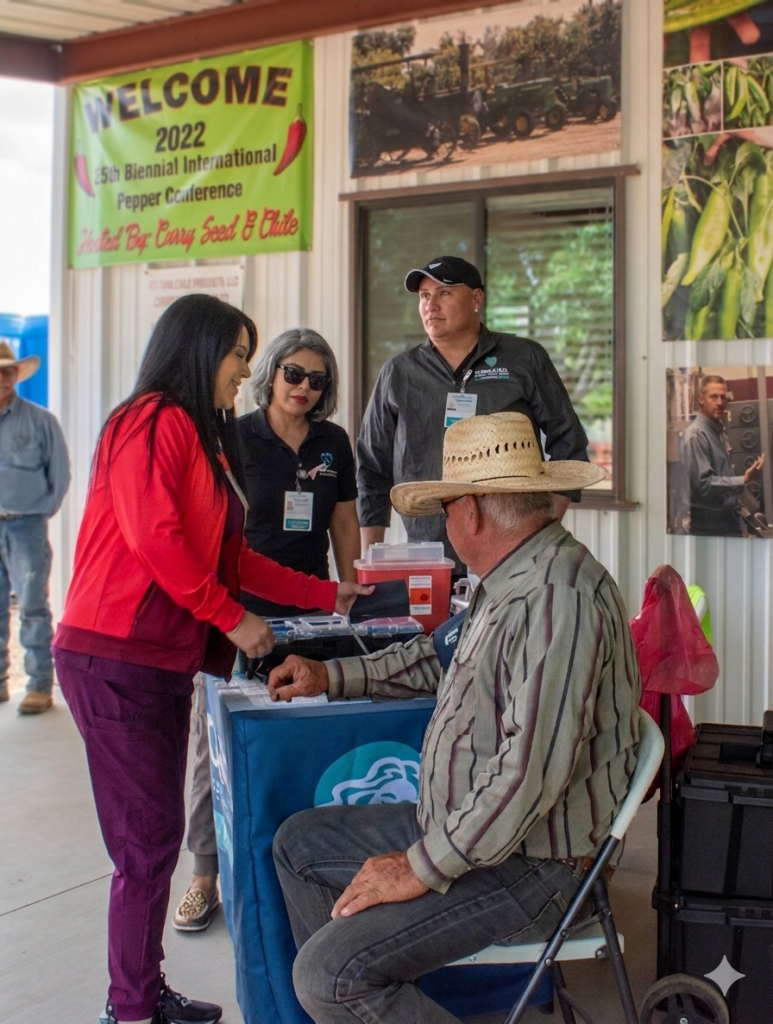
In Cochise County, where approximately 41,000 residents are enrolled in AHCCS, Chiricahua Community Health Centers works to address rural healthcare access across the expansive catchment area. The organization operates 15 medical, dental, and pharmacy clinics, as well as four mobile medical and dental units across the county. The organization, which is a nonprofit Federally Qualified Health Center, has emerged as the largest primary care provider in Southeastern Arizona, serving both insured and uninsured patients.
“We’re both the safety net clinic for people who don’t have insurance and the provider of choice for people who do,” said Dennis Walto, chief external affairs officer for Chiricahua. “The role we play in the health infrastructure of Cochise is a vital one.”
This rural county, two hours southeast of Tucson along the US/Mexico border, is designated as a Health Professional Shortage Area (HPSA) by the Health Resources and Services Administration (HRSA). Chiricahua estimates that more than 34,000 patients identify the health center as their primary healthcare provider, 20% of which are uninsured.
Community health workers (CHWs) assist people in accessing healthcare in these areas in various ways. They are responsible for understanding their community and its needs, allowing for a relationship that bridges the gap between complex medical systems and individuals, according to the American Public Healthcare Association. They play a crucial role in connecting patients to healthcare and are particularly helpful in rural communities that suffer from healthcare inequalities, like those in Southeastern Arizona. CHWs for Chiricahua unwaveringly commit themselves to their communities, in spite of the many challenges they face.
Ten years ago, Claudia Miramontes started at Chiricahua in a cleaning position. During her time there, she developed an interest in the work, earned her certification as a CHW, and has been working for the organization as a CHW for three years. She believes that CHWs have a certain level of empathy for underserved populations. Miramontes and her colleagues assist the community with administering vaccines, coordinating care, conducting basic health screenings, and more, all while tailoring the approach to each individual.
“CHWs focus on finding and supporting those who need help the most, even in the smallest and most remote areas,” Miramontes said. “By building trust and offering guidance, we help people understand the importance of their health and the services available to them.”
Looking forward, Chiricahua has expanded its reach by adding a CHW in the Benson/Willcox area. The pilot program has hired and trained a CHW to be on the front lines in those areas to maximize efficiency, as current CHWs travel 90 minutes from Douglas to Benson and Willcox, reducing time spent with patients. According to Walto, a worker there who knows the area and its residents will greatly benefit the organization and local communities.
As healthcare accessibility continues to be threatened, especially in rural areas, Chiricahua perseveres in the mission of “health for all.”
“We have a lot working against us,” Walto said, “but that’s really what drives us.”
Originally published by the Burton Family Foundation.