



Chiricahua News – Powering Resilience: How Solar Microgrids Are Securing Healthcare Access in Cochise County
In rural healthcare, continuous power isn’t just about keeping the lights on—it is vital to protecting essential care, life-saving medicines, and community trust.
Across Cochise County, unexpected utility outages, monsoon storms, and extreme weather events pose constant operational challenges. For healthcare centers without dedicated backup energy systems, a sudden power failure means interrupted procedures, inaccessible electronic medical records, and the catastrophic loss of temperature-sensitive vaccines and life-saving medications.
To safeguard uninterrupted patient care, Chiricahua Community Health Centers, Inc. (CCHCI) partnered with clean energy leaders to deploy innovative solar microgrids across four key clinical and administrative facilities in Douglas, Arizona.
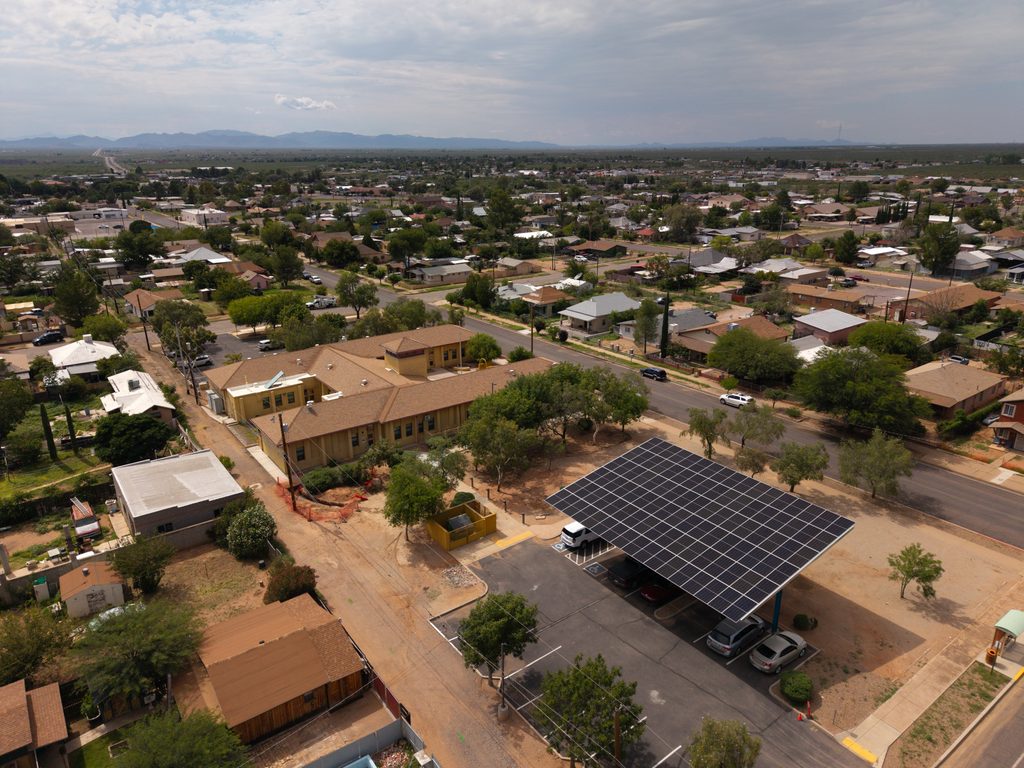
Featured in a recent highlight by Microgrid Knowledge, this critical infrastructure transition marks a major milestone in community health resilience for Southern Arizona.
The Hidden Cost of Power Outages in Rural Health Care
In the first six months of 2024 alone, facilities in Douglas endured over ten distinct power outages lasting anywhere from several minutes to hours. In a clinical setting, power loss creates immediate, cascading risks:
- Patient Safety Concerns: Procedures must stop mid-treatment, whether in a dental chair or during acute clinical visits.
- Loss of Cold-Chain Medications: A single full-day outage can compromise up to $500,000 in refrigerated vaccines, insulin, and emergency therapeutics.
- Service Interruptions: System outages force clinical cancellations, costing approximately $5,000 per day in unrecoverable revenue and leaving low-income and rural residents without immediate care access.
“Imagine a patient being in a dentist chair with the Novocain fully administered… The dentist is proceeding with filling your cavity, or the cavity of your child, and the lights go out. No one is sure if this is going to be a couple of minutes or a couple of hours. Everything stops.”
— Dennis Walto, Chief External Affairs Officer, CCHCI
Technical Innovation: How Solar Microgrids Work
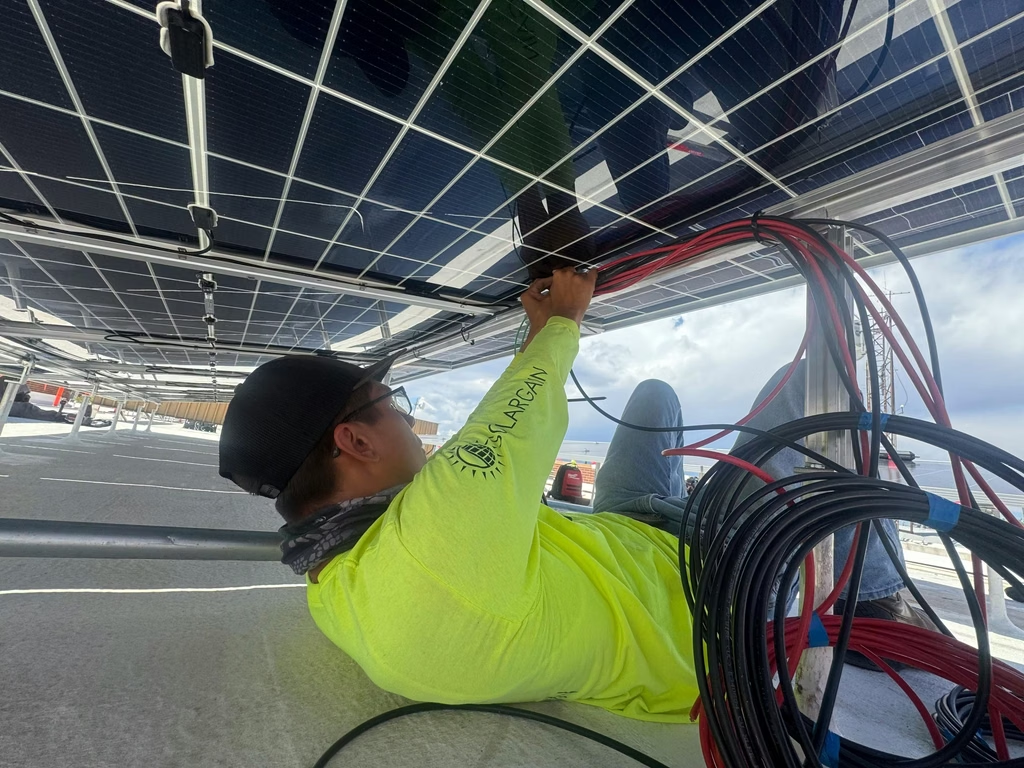
Designed and installed in partnership with Collective Energy, the project integrates clean solar generation with advanced battery storage systems to provide 100% continuous, independent power during grid disruptions.
Microgrid Performance Breakdown
| Feature | Capacity / Function | Impact |
| Annual Solar Generation | ~200 kW total output | Supplies 100% of facility electricity needs |
| Battery Energy Storage | 560 kWh capacity | Sustains critical clinical operations during grid failures |
| Outage Protection | Automated islanding | Instant transition to battery power when the local grid goes down |
The power of this technology was proven firsthand during monsoon storms in August, when heavy rains flooded local streets and knocked out portions of the regional grid. While neighboring grid-tied infrastructure went dark, CCHCI’s newly activated microgrids kept clinic doors open, servers online, and patient care running smoothly without interruption.
Zero Upfront Cost Through Strategic Partnerships
Bringing a $1.3 million clean energy project to a non-profit community health center required innovative financial structuring. By leveraging national grant funding, philanthropic support, and clean energy incentives, CCHCI secured state-of-the-art infrastructure at zero upfront cost:
- Financing & Execution: Developed by mission-driven installer Collective Energy alongside American Microgrid Solutions.
- Philanthropic Support: BuildUS provided grant funding covering battery storage costs for the first five years, with pre-development support from Invest in Our Future and the CHARGE Partnership.
- Federal Clean Energy Incentives: Utilized Investment Tax Credits (ITC) through the Inflation Reduction Act (IRA), including a 10% bonus credit designated for serving low-income “energy communities.”
This structure allows CCHCI to pay predictable monthly energy service fees that are lower than previous utility bills, preserving vital health center funding directly for patient care.
A Healthier, More Resilient Future for Cochise County
As the sole Federally Qualified Health Center (FQHC) serving Cochise County’s 125,000 residents along the U.S.–Mexico border, CCHCI remains dedicated to breaking down barriers to quality care.
“Healthcare access, quality and utilization will all be positively impacted by the safe and reliable power now available. Health services and scheduling can proceed uninterrupted… Microgrid power provides Chiricahua staff the stability and peace of mind that we can continue to do our work every single day and do what we do best, which is to focus on prevention all throughout Cochise County.”
— Dennis Walto
For more information on microgrids and the installation of Chiricahua’s Microgrid visit
MICROGRID KNOWLEGE

Leave a Reply