



Patients like Maria Teeters might typically travel up to three hours, from the Willcox area to Tucson and back, for their health care.
Options for the rural community in Cochise County were to make the trip, visit a mobile health clinic if one was available, or put off the doctor’s visit.
Chiricahua Community Health Centers has officially opened its first permanent clinic in Willcox, marking an expansion of health care access for some residents who for years relied on mobile medical and dental services.
“Oh my gosh, I was so excited. I could not wait for them to get it open,” Teeters said about learning of the expansion.
The nonprofit health provider celebrated the opening Tuesday, January 6, with a ribbon-cutting ceremony at the new clinic on Rex Allen Drive. Community members, local leaders and health officials attended the event, which included brief remarks and tours of the facility.
Chiricahua, a federally qualified health center, has served the Willcox area since the early 2000s through mobile clinics.
But the new brick-and-mortar location allows the organization to see patients five days a week and expand the range of services offered, said Dr. Jonathan Melk, a pediatrician and Chiricahua’s chief executive officer.
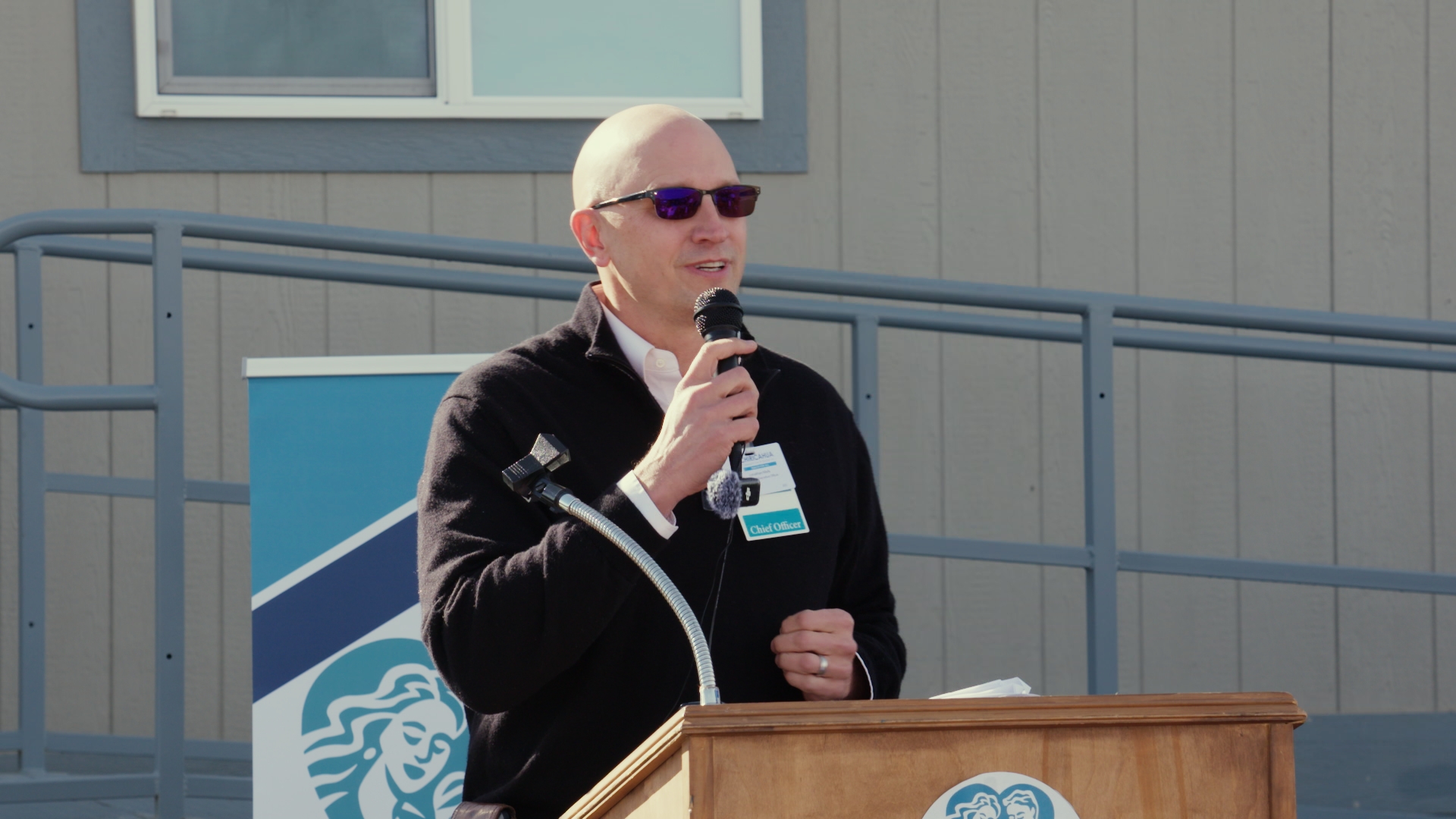 Dr. Jonathan Melk, Chiricahua Community Health Center chief executive officer speaks at the opening ceremony of the permanent clinic in Willcox.
“We have never had a fixed-site clinic in Willcox,” Melk said. “This is the very first time that we’re seeing patients from a building in Willcox.”
Chiricahua Health patients in Willcox previously received services out of mobile clinics.
The organization serves Cochise County, a largely rural and remote region with long travel distances and limited health care options. As a federally qualified health center, the organization provides primary medical, dental, behavioral health and pharmacy services and does not turn patients away based on their ability to pay, Melk said.
“There’s a lot of need, a lot of pent-up demand that us and our other healthcare partners in the community haven’t had the ability to meet yet,” Melk said.
According to a 2024-2026 health assessment for the northern Cochise County service area, the 65 and older population has grown by nearly 25% since 2010 and is expected to grow another 5.8% by 2028.
“(The clinic will) benefit a lot of the older people that can’t travel very far. It’ll benefit me, of course. It’ll benefit just about a lot of the people here in town,” Teeter said.
Health access challenges in the Willcox area remain significant. According to data cited by Chiricahua Health, about 24% of residents have no usual source of medical care, and nearly half of adults reported not receiving dental care in the past year.
The health assessment, which was assembled by Northern Cochise Community Hospital and Benson Health, identified a significant need for dental care, chronic health conditions and substance use disorder services.
Cost remains a barrier for many, with roughly 12% of adults delaying or skipping care due to expense, according to Chiricahua Health.
In 2024, Chiricahua Health reported caring for nearly 1,700 adult patients in more than 3,000 visits through its mobile clinics in Willcox. Leaders with the organization expect that number to increase steadily now that providers can work out of a permanent facility with more space and consistent hours.
The path to opening the clinic took years and required a patchwork of funding and partnerships. In 2019, Chiricahua received rare federal funding that could be used for facility development — a departure from the typical focus on direct patient care. But rising construction costs during the pandemic made original building plans financially impossible, Melk said.
“What was once estimated at about $2.4 million ended up being closer to $14 million,” he said. “That just wasn’t attainable for us, even though we were determined to expand services in Willcox.”
Instead, Chiricahua Health pivoted to a modular clinic model, partnering with Del E. Webb Foundation and receiving additional support from the Arizona Community Foundation and other private philanthropic organizations.
Federal funds from the Health Resources and Services Administration helped the organization purchase and prepare the property, including utilities and parking upgrades to meet city and state codes, Melk said.
Check back frequently for updated NEWS.

Leave a Reply